Sovereign Biomedical AI Platform
for Primer Design, CRISPR & Docking
VigyanLLM is an Indian sovereign Biotechnology artificial intelligence platform built for molecular biology research. It provides autonomous primer design, CRISPR guide RNA analysis, and GPU-accelerated molecular docking via Web Browser access, with free academic access for Indian institutions and global research labs. bioinformatics, primer design, molecular docking. Research use only — not for clinical decisions. Enterprise self-hosting is on our roadmap.
 24-step validation
PDF · CSV · JSON export
24-step validation
PDF · CSV · JSON export
Top Countries
Integrated molecular biology suite
Production-ready modules covering primer design, sequence analysis, genome engineering, and structural biology — all in one platform, no installation.


Primer & PCR Design
24-step primer design pipeline with thermodynamic validation, BLAST specificity, SNP screening, and multiplex optimization.
- Primer & Probe Design
- PCR Analysis & Multiplex Optimization
- Tm & GC Calculators


Sequence Analysis
Nucleotide BLAST, multiple sequence alignment, and sequence search across public and custom reference databases.
- Sequence Search by Name / Accession
- BLAST with Configurable Databases
- MSA with Conservation Scoring


Genome Engineering
CRISPR guide RNA design with off-target scoring, specificity validation, and exon-level targeting across genomes.
- Guide RNA Design & Scoring
- Off-Target Specificity Check
- Exon / Gene Targeting

Structural Biology
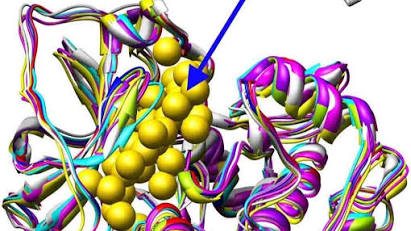
GPU-accelerated molecular docking with scoring functions, binding site analysis, and ligand optimization.
- Protein-Ligand Docking
- Scoring & Binding Analysis
- GPU-Accelerated Computation
Partnership programs
Designed for academic institutions and enterprise labs that need a dependable hosted research platform.

Academic Partnership
Free 30-day full-platform access for qualifying university labs. No feature gates, no throttling, full export.
Learn more →
Enterprise Inquiry
Dedicated support, custom integrations, and bulk seats for labs and institutions. Enterprise self-hosting is on our roadmap.
Contact us →
Verified Partner
Technology partnerships, reseller programs, and integration collaborations for labs and enterprises worldwide.
Apply now →Built for researchers, by researchers
Every tool is designed around a simple principle: be clear about what runs where — see our Privacy policy for exactly what is stored.

Design, analysis, statistics, and docking in one place — every run shows the parameters behind its results.
Computation where it belongs
Sequence utilities run in your browser; heavy pipelines run on our hosted servers — with no per-query surprises on the free tier.
24-step biophysical validation pipeline
Every primer pair passes through thermodynamic checks, BLAST specificity, secondary structure, and repeat masking.
Complete reports, multiple formats
Export results as PDF, CSV, or JSON. IDT and Twist-compatible format for direct oligo ordering.
Built in India. Sovereign AI infrastructure.
Designed and developed in India for global biomedical research. Full data sovereignty, no foreign cloud dependency.
From single primers to high-throughput panels
Whether designing one primer pair or a 96-well panel, the pipeline handles batch design with consistent validation.
Direct academic partnership program
Free access for qualifying university labs. 30-day full-platform evaluation with no feature gates.
From pasted sequence to orderable oligos
Every run follows the same path: constraints in, checked candidates out — nothing hidden between the two.
Paste a template or pick a gene, set your constraints, and the 24-step pipeline runs the tedious checks — thermodynamics, BLAST specificity, secondary structure, repeat masking — with every step visible in the report.
Then export what you need: PDF for the notebook, CSV or JSON for downstream scripts, and IDT- or Twist-compatible formats to send straight to ordering. Already have candidates? Analyze them side by side in the same run. Run a design →


Same chemistry as NCBI Primer-BLAST
Same thermodynamic models as NCBI Primer-BLAST, running in your browser.
Is VigyanLLM free? Trusted primer design, answered
Is VigyanLLM free to use?
Yes. Running any of the tools — primer design, BLAST, MSA, docking, Tm and GC calculators — is free for anonymous visitors, with no login required at the point of use. Free accounts get a daily allowance of analyses at no cost. Paid plans only add persistence and scale: saving results, PDF/PPT export, batch design, and higher daily limits. There is a free academic tier for qualifying university labs.
Can I trust a free primer design tool for research?
Reliability comes from the validation model, not the price tag. VigyanLLM uses the same shared chemistry as NCBI Primer-BLAST — SantaLucia 1998 nearest-neighbor thermodynamics for Tm, Primer3 v2.6.1 for hairpin and dimer screening, and BLAST-level specificity. Our public validation benchmark independently reproduces the reported Tm of three published primer sets, confirming agreement within tool-to-tool variation.
How do I access a reliable online primer designer in research?
You can start at vigyanllm.in/primer without signing up. Paste your template, choose PCR type and amplicon window, and the pipeline runs Design Automatically. For diagnostics and clinical use, results come with complete reports and a validation record tied to published primers — evidence a reviewer can verify.
Is VigyanLLM restricted to India only?
No. VigyanLLM is designed and developed in India and is free for qualifying Indian academic institutions, but the platform is open globally to all researchers. Tools run in the browser with no US cloud dependency by default, so data stays where your lab wants it, wherever you are.
Research Topics
See It in Action
Primer design tutorial — from sequence input to validated report in under 5 minutes